I heard this old Cherokee story the other day. I thought you might like it.
A young Cherokee boy, angry about being mistreated and not knowing what to do, went to his grandfather for advice.
The grandfather told him:
I too, at times, have felt a great hate for those that have taken so much, with no sorrow for what they do.
But hate wears you down, and does not hurt your enemy. It is like taking poison and wishing your enemy would die. I have struggled with these feelings many times."
"It is as if there are two wolves inside me. One is good and does no harm. He lives in harmony with all around him, and does not take offense when no offense was intended. He will only fight when it is right to do so, and in the right way.
But the other wolf is full of anger. The littlest thing will set him into a fit of temper. He fights everyone, all the time, for no reason. He cannot think because his anger and hate are so great. It is helpless anger, for his anger will change nothing.
Sometimes, it is hard to live with these two wolves inside me, for they fight to control my spirit."
The boy looked intently into his Grandfather's eyes and asked, "Which one wins, Grandfather?"
The Grandfather smiled and quietly said, "The one that I feed."
Which wolf will you feed?
Showing posts with label Social Skills. Show all posts
Tuesday, October 26, 2010
Friday, October 8, 2010
EVERBODY Needs Practice
The San Francisco Giants won their first baseball playoff game in 7 years last night. The Giants earned their spot in the playoffs mostly on the strength of their pitching, which in terms of Earn Run Average (ERA, or Earned Runs per 9 innings) was the best in the National League this season.
The winning pitcher was Tim Lincecum, also known as "the Freak". Lincecum has won the National League Cy Young Award, the most prestigious award a pitcher can earn, two years in a row. He is one of the most feared pitchers in the league, has lead the league in strikeouts for three consecutive years and is the first San Francisco Giants pitcher since Juan Marichal to strikeout at least 200 batters in a single season three years in a row. He even has his own ESPN commercial.
One of the reasons for Lincecum's success was his practice routine, which was taught to him by his dad. Lincecum's dad supervised his workouts right up to the time Tim became a Giant.
Lincecum started the 2010 season with a 5-0 record and a 1.76 ERA. It looked like he was headed for another great season, but it didn't quite turn out that way.
After that great start, Lincecum began to struggle.
In August, when the Giants were trying to gain ground on the first place Padres, Lincecum didn't win a single game. He has an ERA of 7.82. He was so ineffective the fans worried that something was wrong with him. His fastball, which he was throwing at 94-95 miles per hour at the beginning of the year, was down to around 90 miles per hour. Lincecum said that he felt fine, and that he should probably go back to doing some of the things he'd been doing earlier in his career.
Lincecum was referring to his practice routine. Sometime after the beginning of the season, he'd stopped practicing some of the things which made him successful. In late August, he started doing these things again. In September, when the team needed him most, Lincecum won 5 games and lost only one.
The lesson here is a simple one: Everyone, no matter how good, needs to practice.
PE is a class where kids learn new physical skills, then practice them. When we are learning a team sports unit, like football, it is very important that everyone be given a chance to participate by playing different positions. This helps students to understand the game and try new skills. The more chances a student gets, the more likely they will experience success. Success gives the students a sense of satisfaction and accomplishment.
Some of you do an outstanding job of sharing responsibility. On your teams everybody gets a chance to play every spot and experience some personal success. The members of those teams became excited about playing football. I had several students from those teams tell me "I understand football now!" and "this is fun!"
Unfortunately, this isn't true of every team. The members of some teams get so wrapped up in winning or showing off how much they know or how good they are (at least in their own minds), that they neglect to give other teammates a chance. This is selfish. It prevents students from learning. Several students from those teams told me: "I don't get football," and "this is boring".
Kids, I need your help on this. Kids can't learn if they aren't given a chance to go so. The next time we have a team sports unit, please, please give everybody a chance to contribute. Sharing responsibility makes everybody feel good. It keeps people's buckets full.
The winning pitcher was Tim Lincecum, also known as "the Freak". Lincecum has won the National League Cy Young Award, the most prestigious award a pitcher can earn, two years in a row. He is one of the most feared pitchers in the league, has lead the league in strikeouts for three consecutive years and is the first San Francisco Giants pitcher since Juan Marichal to strikeout at least 200 batters in a single season three years in a row. He even has his own ESPN commercial.
One of the reasons for Lincecum's success was his practice routine, which was taught to him by his dad. Lincecum's dad supervised his workouts right up to the time Tim became a Giant.
Lincecum started the 2010 season with a 5-0 record and a 1.76 ERA. It looked like he was headed for another great season, but it didn't quite turn out that way.
After that great start, Lincecum began to struggle.
In August, when the Giants were trying to gain ground on the first place Padres, Lincecum didn't win a single game. He has an ERA of 7.82. He was so ineffective the fans worried that something was wrong with him. His fastball, which he was throwing at 94-95 miles per hour at the beginning of the year, was down to around 90 miles per hour. Lincecum said that he felt fine, and that he should probably go back to doing some of the things he'd been doing earlier in his career.
Lincecum was referring to his practice routine. Sometime after the beginning of the season, he'd stopped practicing some of the things which made him successful. In late August, he started doing these things again. In September, when the team needed him most, Lincecum won 5 games and lost only one.
The lesson here is a simple one: Everyone, no matter how good, needs to practice.
PE is a class where kids learn new physical skills, then practice them. When we are learning a team sports unit, like football, it is very important that everyone be given a chance to participate by playing different positions. This helps students to understand the game and try new skills. The more chances a student gets, the more likely they will experience success. Success gives the students a sense of satisfaction and accomplishment.
Some of you do an outstanding job of sharing responsibility. On your teams everybody gets a chance to play every spot and experience some personal success. The members of those teams became excited about playing football. I had several students from those teams tell me "I understand football now!" and "this is fun!"
Unfortunately, this isn't true of every team. The members of some teams get so wrapped up in winning or showing off how much they know or how good they are (at least in their own minds), that they neglect to give other teammates a chance. This is selfish. It prevents students from learning. Several students from those teams told me: "I don't get football," and "this is boring".
Kids, I need your help on this. Kids can't learn if they aren't given a chance to go so. The next time we have a team sports unit, please, please give everybody a chance to contribute. Sharing responsibility makes everybody feel good. It keeps people's buckets full.
Sunday, June 6, 2010
How Failure Breeds Success
How long did it take for humans to invent a controllable aircraft?
The first known drawing of a flying machine was done by Leonardo Da Vinci in around 1488,
but the first controlled flight of an airplane wasn't until 1903.
That's a span of 415 years.
So what happened in the meantime? Didn't anyone try to make an airplane between the time of Da Vinci and the Wright brothers?
Of course they did. There were many, many attempts to build aircraft before the Wright brothers. They just weren't successful.
So, how did the Wright brothers accomplish what other before them had not? Did they suddenly awake one day with a breakthrough idea?
No.
They learned from everybody else' failures.
Orville and Wilbur Wright took the knowledge gained from everyone who had gone before them, eliminated the things that didn't work, kept the things that did and added their own twist, "three axis control"; a system used to this day. The result? An airplane that could go up, down, left and right.
The Wright brothers themselves failed many times before they flew successfully. But each failure taught them something. By figuring out what went wrong, devising a solution and sticking to it, they were ultimately successful.
This is just one example of a process that has been repeated throughout history.
Everybody fails at some point. It is how we handle failure that determines whether or not we will eventually succeed.
The two simple keys to succeeding from failure are:
1. Don't give up.
2. Learn from your mistakes.
It's not paying attention to this second key that causes people to fail repeatedly. You see, in order to learn from your mistakes, you must first admit that you made one. If you can't admit to yourself that you made an error, you can't learn from it because in your mind, you haven't done anything wrong. Many people choose to blame others for their own errors and therefore never learn from them, dooming themselves to fail over and over again.
So try to remember that it's okay to make mistakes. Admit them, learn from them and do better the next time. That's how to be successful.
"Every failure brings you one step closer to success"
The first known drawing of a flying machine was done by Leonardo Da Vinci in around 1488,
but the first controlled flight of an airplane wasn't until 1903.
That's a span of 415 years.
So what happened in the meantime? Didn't anyone try to make an airplane between the time of Da Vinci and the Wright brothers?
Of course they did. There were many, many attempts to build aircraft before the Wright brothers. They just weren't successful.
So, how did the Wright brothers accomplish what other before them had not? Did they suddenly awake one day with a breakthrough idea?
No.
They learned from everybody else' failures.
Orville and Wilbur Wright took the knowledge gained from everyone who had gone before them, eliminated the things that didn't work, kept the things that did and added their own twist, "three axis control"; a system used to this day. The result? An airplane that could go up, down, left and right.
The Wright brothers themselves failed many times before they flew successfully. But each failure taught them something. By figuring out what went wrong, devising a solution and sticking to it, they were ultimately successful.
This is just one example of a process that has been repeated throughout history.
Everybody fails at some point. It is how we handle failure that determines whether or not we will eventually succeed.
The two simple keys to succeeding from failure are:
1. Don't give up.
2. Learn from your mistakes.
It's not paying attention to this second key that causes people to fail repeatedly. You see, in order to learn from your mistakes, you must first admit that you made one. If you can't admit to yourself that you made an error, you can't learn from it because in your mind, you haven't done anything wrong. Many people choose to blame others for their own errors and therefore never learn from them, dooming themselves to fail over and over again.
So try to remember that it's okay to make mistakes. Admit them, learn from them and do better the next time. That's how to be successful.
"Every failure brings you one step closer to success"
Wednesday, May 12, 2010
The Best Teachers I Ever Had
By the time your formal education is over you, like me, will have had dozens and dozens of teachers. Some of them will be funny, others will be boring or seem bored themselves, and some will seem like they're trying too hard to be liked. The best of them will keep your attention, fascinate you and inspire you. On this Day of the Teacher, I got to reminiscing about some of the teachers I had.
Among the teachers I had was a creepy middle school English teacher who used to flick his tongue, like a snake, whenever he was asked a difficult question.
Then there was the high school Chemistry teacher who used the analogy of boys asking girls to a dance as a way of explaining chemical reactions. It didn't always work. Whenever a student asked for further explanation, this teacher would simply repeat the same analogy again.
In college, I had an Economics teachers who use to come to class in costumes in an effort to make a very dry subject interesting. It didn't work.
I remember those teachers for their idiosyncrasies, but don't remember much about what they taught. Memorable personalities perhaps, but not particularly good teachers.
The best teachers I had all shared a common trait; passion. Passion not only for the subject they taught, but for teaching itself. Their passion was contagious and inspired me to change the way I looked at the world and the way I thought. I feel their influence to this day.
In high school I had Physiology teacher named Mr. Hawks. He wore his hair in a crew cut and drove a Jeep. He had obviously once been in the military.
His classroom consisted of rows of lab tables. On the first day of class, I sat in the back row. The first thing Mr. Hawks said to us, as he pointed successively to each row of tables, was:
"In my experience, this is where the A students sit (pointing to the front row), the B students (the second row), the C students (the third row), and everybody else (gesturing to the rest of the room)."
"If you want to change your seat," he concluded, "now would be the time to do so."
I didn't move, but thought, "Whoa, this guy is going to be tough"
And he was. He was very demanding and very particular about the quality of our work. He allowed no talking in class and his demeanor was such that he only had to tell us once. But, he was also a fascinating lecturer and a great story teller who always managed to keep our interest. It turned out that talking in class wasn't a problem, because none of us wanted to miss what he had to say.
As the semester went on, Mr Hawks began to loosen up. When we did experiments, we got to see a different side of him, because he went from table to table, patiently answering questions and even making jokes when somebody got an unexpected result.
During winter break, Mr. Hawks took a trip to the Amazon. He returned with several native artifacts, including a blow gun, a bow and a mortar and pestle. He put them on display for the class. We students excitedly approached the display.
One of my classmates picked up the bow and pulled back on its string. The bow snapped. The class went dead silent.
Mr. Hawks gave a death stare to the student and took the bow from his hand.
"No wonder I got it so cheap," he said.
I took Mr. Hawk's class when I was a junior. His inspiration was such that I chose to go to college at U.C Davis as a Biology major and created in me a lifelong interest in the natural world around us.
As a graduate student in college, I signed up for a class called "Theories of Criticism". I like to write and thought that this class was going to be about how to write movie and book reviews. It was about anything but that.
The teacher for this class was a Mr. Jenkins. The class was small, with only about 15 students. We all sat around in a circle. On the first day of class, Mr. Jenkins sat down, look each of us in the eye in turn and declared: "in order to be an effective critic, the first thing you need to do is kill your ego."
This was my introduction to the single most interesting and thought provoking class I ever took. It was way too complicated to explain here, but it turned out to have nothing to do with writing criticism at all. Instead, this class made me take a look at our society as a whole and the hidden forces that encourage us to make the choices we do. This was a 90 minute class in which Mr Jenkins did almost all of the talking and it was never, never boring. If there was a theme to this class it was Socrates' writing that "the unexamined life is not worth living". Mr. Jenkins had a profound influence on how I see the world and the people in it. Just as Mr. Jenkins intended.
Mr. Hawks and Mr. Jenkins couldn't have been more different. Hawks was very fit with an upright, military bearing and liked complete order in class. Jenkins was overweight with long hair and liked to sit, informally, in a circle with us students. Both, however, shared two great loves: love for the subjects they taught and the love of teaching that subject to their students. This is what made them the two best teachers I ever had.
Among the teachers I had was a creepy middle school English teacher who used to flick his tongue, like a snake, whenever he was asked a difficult question.
Then there was the high school Chemistry teacher who used the analogy of boys asking girls to a dance as a way of explaining chemical reactions. It didn't always work. Whenever a student asked for further explanation, this teacher would simply repeat the same analogy again.
In college, I had an Economics teachers who use to come to class in costumes in an effort to make a very dry subject interesting. It didn't work.
I remember those teachers for their idiosyncrasies, but don't remember much about what they taught. Memorable personalities perhaps, but not particularly good teachers.
The best teachers I had all shared a common trait; passion. Passion not only for the subject they taught, but for teaching itself. Their passion was contagious and inspired me to change the way I looked at the world and the way I thought. I feel their influence to this day.
In high school I had Physiology teacher named Mr. Hawks. He wore his hair in a crew cut and drove a Jeep. He had obviously once been in the military.
His classroom consisted of rows of lab tables. On the first day of class, I sat in the back row. The first thing Mr. Hawks said to us, as he pointed successively to each row of tables, was:
"In my experience, this is where the A students sit (pointing to the front row), the B students (the second row), the C students (the third row), and everybody else (gesturing to the rest of the room)."
"If you want to change your seat," he concluded, "now would be the time to do so."
I didn't move, but thought, "Whoa, this guy is going to be tough"
And he was. He was very demanding and very particular about the quality of our work. He allowed no talking in class and his demeanor was such that he only had to tell us once. But, he was also a fascinating lecturer and a great story teller who always managed to keep our interest. It turned out that talking in class wasn't a problem, because none of us wanted to miss what he had to say.
As the semester went on, Mr Hawks began to loosen up. When we did experiments, we got to see a different side of him, because he went from table to table, patiently answering questions and even making jokes when somebody got an unexpected result.
During winter break, Mr. Hawks took a trip to the Amazon. He returned with several native artifacts, including a blow gun, a bow and a mortar and pestle. He put them on display for the class. We students excitedly approached the display.
One of my classmates picked up the bow and pulled back on its string. The bow snapped. The class went dead silent.
Mr. Hawks gave a death stare to the student and took the bow from his hand.
"No wonder I got it so cheap," he said.
I took Mr. Hawk's class when I was a junior. His inspiration was such that I chose to go to college at U.C Davis as a Biology major and created in me a lifelong interest in the natural world around us.
As a graduate student in college, I signed up for a class called "Theories of Criticism". I like to write and thought that this class was going to be about how to write movie and book reviews. It was about anything but that.
The teacher for this class was a Mr. Jenkins. The class was small, with only about 15 students. We all sat around in a circle. On the first day of class, Mr. Jenkins sat down, look each of us in the eye in turn and declared: "in order to be an effective critic, the first thing you need to do is kill your ego."
This was my introduction to the single most interesting and thought provoking class I ever took. It was way too complicated to explain here, but it turned out to have nothing to do with writing criticism at all. Instead, this class made me take a look at our society as a whole and the hidden forces that encourage us to make the choices we do. This was a 90 minute class in which Mr Jenkins did almost all of the talking and it was never, never boring. If there was a theme to this class it was Socrates' writing that "the unexamined life is not worth living". Mr. Jenkins had a profound influence on how I see the world and the people in it. Just as Mr. Jenkins intended.
Mr. Hawks and Mr. Jenkins couldn't have been more different. Hawks was very fit with an upright, military bearing and liked complete order in class. Jenkins was overweight with long hair and liked to sit, informally, in a circle with us students. Both, however, shared two great loves: love for the subjects they taught and the love of teaching that subject to their students. This is what made them the two best teachers I ever had.
Thursday, March 18, 2010
Password-stealing Virus Targets Facebook
Hackers have flooded the Internet with virus-tainted spam that targets Facebook's estimated 400 million users in an effort to steal banking passwords and gather other sensitive information.
The emails tell recipients that the passwords on their Facebook accounts have been reset, urging them to click on an attachment to obtain new login credentials, according to anti-virus software maker McAfee Inc.
If the attachment is opened, it downloads several types of malicious software, including a program that steals passwords, McAfee said on Wednesday.
Hackers have long targeted Facebook users, sending them tainted messages via the social networking company's own internal email system. With this new attack, they are using regular Internet email to spread their malicious software.
A Facebook spokesman said the company could not comment on the specific case, but pointed to a status update the company posted on its web site earlier on Wednesday warning users about the spoofed email and advising users to delete the email and to warn their friends.
McAfee estimates that hackers sent out tens of millions of spam across Europe, the United States and Asia since the campaign began on Tuesday.
Dave Marcus, McAfee's director of malware research and communications, said that he expects the hackers will succeed in infecting millions of computers.
"With Facebook as your lure, you potentially have 400 million people that can click on the attachment. If you get 10 percent success, that's 40 million," he said.
The email's subject line says "Facebook password reset confirmation customer support," according to Marcus.
Good Rule of Thumb: Don't open an emails from senders you don't know.....
The emails tell recipients that the passwords on their Facebook accounts have been reset, urging them to click on an attachment to obtain new login credentials, according to anti-virus software maker McAfee Inc.
If the attachment is opened, it downloads several types of malicious software, including a program that steals passwords, McAfee said on Wednesday.
Hackers have long targeted Facebook users, sending them tainted messages via the social networking company's own internal email system. With this new attack, they are using regular Internet email to spread their malicious software.
A Facebook spokesman said the company could not comment on the specific case, but pointed to a status update the company posted on its web site earlier on Wednesday warning users about the spoofed email and advising users to delete the email and to warn their friends.
McAfee estimates that hackers sent out tens of millions of spam across Europe, the United States and Asia since the campaign began on Tuesday.
Dave Marcus, McAfee's director of malware research and communications, said that he expects the hackers will succeed in infecting millions of computers.
"With Facebook as your lure, you potentially have 400 million people that can click on the attachment. If you get 10 percent success, that's 40 million," he said.
The email's subject line says "Facebook password reset confirmation customer support," according to Marcus.
Good Rule of Thumb: Don't open an emails from senders you don't know.....
Thursday, February 4, 2010
Speechifying - How (and how not) to Get Yourself Elected
For this year's hockey tournament, I conducted an experiment. On team captain election day, I gave all eligible candidates a chance to speak to the class. This was an exercise in persuasion - an effort by the speaker to cause classmates to believe that s/he was the best person for the team captain position.
One of the secrets to this is to talk about how the speaker can benefit the voter. Voters choose based on who is best for the voter, not the speaker. Voters aren't really interested in hearing what the speaker wants. They're interested in hearing which speaker will give the voter what the voter wants. Speakers who to do the best job of telling voters how they would be good for the voter will usually win. This year's hockey team election was a good example of this.
Most of the speeches went something like this: "I'm running for captain because I've always wanted to be team captain, and, yeah...."
Others, seeking to be more convincing, said something like this: "I'm running for captain, because I really want to be one. I really, really want to be a captain. I hope you vote for me."
Are these persuasive speeches? How were these candidates different from one another? What are these candidates offering the voters? How do the voters benefit?
There were two speeches which had a significantly different message. One speaker told the class, "I'll be a fair and honest captain, I'll listen to what you tell me and I'll work hard to make sure the team is strong."
The other said: "I've watched other captains, so I think I know what a good captain should be like. I won't yell at you and I'll try to make sure that everybody has fun."
These speeches contained specific messages directed at the voters. In essence they said, if you vote for me, I'll do this for you.
The voters liked what they heard. The kids who delivered the latter speeches were the top vote getters in their classes by significant margins. The other speakers didn't get elected, receiving fewer votes than people who didn't speak at all.
One of the secrets to this is to talk about how the speaker can benefit the voter. Voters choose based on who is best for the voter, not the speaker. Voters aren't really interested in hearing what the speaker wants. They're interested in hearing which speaker will give the voter what the voter wants. Speakers who to do the best job of telling voters how they would be good for the voter will usually win. This year's hockey team election was a good example of this.
Most of the speeches went something like this: "I'm running for captain because I've always wanted to be team captain, and, yeah...."
Others, seeking to be more convincing, said something like this: "I'm running for captain, because I really want to be one. I really, really want to be a captain. I hope you vote for me."
Are these persuasive speeches? How were these candidates different from one another? What are these candidates offering the voters? How do the voters benefit?
There were two speeches which had a significantly different message. One speaker told the class, "I'll be a fair and honest captain, I'll listen to what you tell me and I'll work hard to make sure the team is strong."
The other said: "I've watched other captains, so I think I know what a good captain should be like. I won't yell at you and I'll try to make sure that everybody has fun."
These speeches contained specific messages directed at the voters. In essence they said, if you vote for me, I'll do this for you.
The voters liked what they heard. The kids who delivered the latter speeches were the top vote getters in their classes by significant margins. The other speakers didn't get elected, receiving fewer votes than people who didn't speak at all.
Friday, January 1, 2010
Backlash
back⋅lash [bak-lash] Noun: a strong or violent reaction, as to some social or political change: “a backlash of angry feeling among Southern conservatives within the party.”
In previous posts, I described what it means to be Machiavellian and how Russell Hantz used such a strategy in his attempt to win the TV show “Survivor, Samoa”.
I also wrote that machinations could only be effective to a certain point; the point to which all other participants were willing to play along.
Russell’s machinations included lying, cheating, and stealing. He lied about his personal background to win sympathy from his tribemates and he lied by creating false alliances with almost every other player in the game. A true alliance is meant to make all allies stronger. Russell’s “alliances” were really only designed to make Russell’s position stronger, for he never helped anyone and if any of his “allies” did something he didn’t like, he’s make up a story about how they weren’t trustworthy and should be voted out. The rest of the group usually went along with him.
As the game unfolded it was clear that Russell was the most dominant player in the game. From the merge to the final three, Russell controlled every aspect of the game. His Machiavellian strategy had enabled him to achieve and keep his power position.
Now here’s the trick: while a Machiavellian strategy will work to put one in power and will help one maintain a power, it creates a lot of ill will. People who use such strategy often become hated. Once they become hated others look for ways to take away their power. This is backlash.
Julius Caesar was the commander of Rome’s most powerful army. He used it to start a Roman civil war, which he won. After winning, he declared himself dictator for life, meaning that he controlled the Roman government. The previous roman government, a group of men called the Senate, lost almost all of their power. They wanted it back. In an effort to get it they struck back at Caesar by murdering him. It was an extreme case of backlash.
On his way to becoming the most powerful player in Survivor, Russell made lots of enemies. He didn’t care though, because he managed to get every one of his enemies voted out of the game. But, in Survivor, there is a catch.
Survivor has a built in power equalizer. It is the jury. The jury is comprised of the last 10 players voted out of the game. At the end of the game, the jury votes to choose the winner of the game. The jury can’t win the game, but they can decide who does. This is something that all finalists must consider while playing the game. Russell failed to do so.
As a result, despite being what Jeff Probst, the host of the show, called the “most dominant player in the history of the show”, Russell didn’t win. A player named Natalie did.
Natalie never really did anything special to make the final three other not make enemies. Everybody liked her. Russell chose to take her to the final three with him because he felt that she was least likely to win.
In the end, the jury voted for Natalie, not because she played a great game, but because she wasn’t Russell. She was the beneficiary of backlash against Russell.
So it’s important to remember to, in your quest to achieve your goals, treat others respectfully along the way.
If you don’t, sooner or later, your failure to do so will come back to haunt you.
In previous posts, I described what it means to be Machiavellian and how Russell Hantz used such a strategy in his attempt to win the TV show “Survivor, Samoa”.
I also wrote that machinations could only be effective to a certain point; the point to which all other participants were willing to play along.
Russell’s machinations included lying, cheating, and stealing. He lied about his personal background to win sympathy from his tribemates and he lied by creating false alliances with almost every other player in the game. A true alliance is meant to make all allies stronger. Russell’s “alliances” were really only designed to make Russell’s position stronger, for he never helped anyone and if any of his “allies” did something he didn’t like, he’s make up a story about how they weren’t trustworthy and should be voted out. The rest of the group usually went along with him.
As the game unfolded it was clear that Russell was the most dominant player in the game. From the merge to the final three, Russell controlled every aspect of the game. His Machiavellian strategy had enabled him to achieve and keep his power position.
Now here’s the trick: while a Machiavellian strategy will work to put one in power and will help one maintain a power, it creates a lot of ill will. People who use such strategy often become hated. Once they become hated others look for ways to take away their power. This is backlash.
Julius Caesar was the commander of Rome’s most powerful army. He used it to start a Roman civil war, which he won. After winning, he declared himself dictator for life, meaning that he controlled the Roman government. The previous roman government, a group of men called the Senate, lost almost all of their power. They wanted it back. In an effort to get it they struck back at Caesar by murdering him. It was an extreme case of backlash.
On his way to becoming the most powerful player in Survivor, Russell made lots of enemies. He didn’t care though, because he managed to get every one of his enemies voted out of the game. But, in Survivor, there is a catch.
Survivor has a built in power equalizer. It is the jury. The jury is comprised of the last 10 players voted out of the game. At the end of the game, the jury votes to choose the winner of the game. The jury can’t win the game, but they can decide who does. This is something that all finalists must consider while playing the game. Russell failed to do so.
As a result, despite being what Jeff Probst, the host of the show, called the “most dominant player in the history of the show”, Russell didn’t win. A player named Natalie did.
Natalie never really did anything special to make the final three other not make enemies. Everybody liked her. Russell chose to take her to the final three with him because he felt that she was least likely to win.
In the end, the jury voted for Natalie, not because she played a great game, but because she wasn’t Russell. She was the beneficiary of backlash against Russell.
So it’s important to remember to, in your quest to achieve your goals, treat others respectfully along the way.
If you don’t, sooner or later, your failure to do so will come back to haunt you.
Wednesday, December 23, 2009
Hubris
Hubris [hyoo-bris, hoo-], noun: excessive pride or self-confidence; arrogance.
The thing I like best about Survivor is that it provides living examples of the many varieties of human behavior. Watching it can show how one person’s behavior can affect the rest of a group, how many people prefer to simply follow someone else’s lead and how others overestimate their own strengths. Most striking though, is how, season after season, so many people fail to understand how their actions are viewed by others.
Those of you who don’t watch Survivor should know that each season, or game, starts with two teams known as “tribes”. The tribes compete against each other in challenges similar to, but more elaborate than, the ones we do in PE. Some challenges are “elimination” challenges. The tribe which loses one of these must vote out, or eliminate, one of its members from the game. Once the eliminations bring the total number of players in the game down to 10 or 12, the tribes merge and become one new tribe.
At the time of the merger, one of the former tribes usually has more members than the other, giving them an advantage for the remainder of the game. If the old tribe mates stick together, it is fairly easy for one of its members to win the game. But, therein lies the problem. Only one person can win.
So, each season of Survivor begins with two tribes working together in order to get to the merge with more surviving members than the other. After that, everybody is playing for him or herself.
This season, Russell Hantz played strictly for himself from the first day.
He went in with a Machiavellian (see the post called “The Prince”) strategy of lying, cheating and stealing his way to the merge and used it very effectively.
The thing is, that strategy will usually only work for as long as people go along with it. Once people figure out that someone is using machinations against them, they will revolt against her/him. It’s usually only a matter of time.
The first part of Russell's strategy was to demoralize his own tribe mates. By stealing water from, burning the clothes of and lying to the members of his own tribe, Foa Foa,
he destroyed the tribe’s confidence. By remaining strong and confident himself, Russell emerged as the tribe's leader.
As I watched Russell’s machinations unfold I wondered if his short term gain, control of his tribe, would hurt his long term chances to win the game because Foa Foa's lack of confidence hurt its ability compete against the other tribe, Galu.
Indeed, Foa Foa came to believe that it was a victim of bad luck. They became very discouraged and worse, very hungry. They lost almost every challenge. At the time of the merge, they had only 4 remaining members. Galu went to the merge with 8.
At that point, it looked like 4 members of Galu would have an easy path to the final four because they had a seemingly insurmountable 4 player advantage. All they had to do was vote together at Tribal Council and they could eliminate Foa Foa one by one. Then a funny thing happened. Over the course of next several episodes, almost all former Galu members were eliminated and one switched sides. The former Galu had completely lost control of the game.
How did this happen?
Two reasons.
First, Galu’s leader, Russell Swan
suffered a medical emergency and had to leave the game. This didn’t seem important at the time because Galu had such a big numbers advantage. But, Russell was a true leader who made every effort to keep the tribe working together. After he left, nobody replaced him effectively.
Second, Galu was overconfident. They went into the merge believing they could do whatever they wanted and that the former Foa Foa people wouldn’t put up much of a fight. There is a word for this. It is Hubris.
Hubris means overconfidence, or arrogance, combined with presumption. Presumption means believing that something is true, even though it might not be. Hubris, especially when one is overconfident based on a presumption that is false, can get one into trouble.
Galu’s hubris lead them to make the following questionable decisions:
• The voted out one of their own former tribe mates at the first Tribal Council. They did this because they presumed that all former Galu members would vote together in future Tribal Councils, so even after eliminating one of their own, they’d still have a 3 player advantage. The problem with that thinking was:
• They’d been completely disrespectful of one of their tribe mates throughout the first part of the game. Yet, despite treating her like dirt, they still believed that she’d vote with her old tribe. She didn’t. Would you?
• In one stroke of good luck, Russell played his Immunity Idol before he needed to. Nobody even knew he had it, because he found it without using any clues. After he played it, nobody on Galu seriously considered that he might find it again. He did. At the next Tribal Council, Galu tried to vote Russell only to find that Russell had found the idol again. Galu lost a former member instead. Galu discovered that their vote advantage was gone, when the tribe mate they treated so badly voted against them.
By the time Galu figured out that one of their former tribemates had switched sides, it was too late. Their hubris had cost them the lead. Now, they were doomed.
Foa Foa, the tribe which never won a single elimination challenge and whose most prominent member, Russell, was using everybody against everybody else, was now in control of the game.
The question now became: would Russell’s Machiavellian tactics win him the game?
The thing I like best about Survivor is that it provides living examples of the many varieties of human behavior. Watching it can show how one person’s behavior can affect the rest of a group, how many people prefer to simply follow someone else’s lead and how others overestimate their own strengths. Most striking though, is how, season after season, so many people fail to understand how their actions are viewed by others.
Those of you who don’t watch Survivor should know that each season, or game, starts with two teams known as “tribes”. The tribes compete against each other in challenges similar to, but more elaborate than, the ones we do in PE. Some challenges are “elimination” challenges. The tribe which loses one of these must vote out, or eliminate, one of its members from the game. Once the eliminations bring the total number of players in the game down to 10 or 12, the tribes merge and become one new tribe.
At the time of the merger, one of the former tribes usually has more members than the other, giving them an advantage for the remainder of the game. If the old tribe mates stick together, it is fairly easy for one of its members to win the game. But, therein lies the problem. Only one person can win.
So, each season of Survivor begins with two tribes working together in order to get to the merge with more surviving members than the other. After that, everybody is playing for him or herself.
This season, Russell Hantz played strictly for himself from the first day.
He went in with a Machiavellian (see the post called “The Prince”) strategy of lying, cheating and stealing his way to the merge and used it very effectively.
The thing is, that strategy will usually only work for as long as people go along with it. Once people figure out that someone is using machinations against them, they will revolt against her/him. It’s usually only a matter of time.
The first part of Russell's strategy was to demoralize his own tribe mates. By stealing water from, burning the clothes of and lying to the members of his own tribe, Foa Foa,
he destroyed the tribe’s confidence. By remaining strong and confident himself, Russell emerged as the tribe's leader.
As I watched Russell’s machinations unfold I wondered if his short term gain, control of his tribe, would hurt his long term chances to win the game because Foa Foa's lack of confidence hurt its ability compete against the other tribe, Galu.
Indeed, Foa Foa came to believe that it was a victim of bad luck. They became very discouraged and worse, very hungry. They lost almost every challenge. At the time of the merge, they had only 4 remaining members. Galu went to the merge with 8.
At that point, it looked like 4 members of Galu would have an easy path to the final four because they had a seemingly insurmountable 4 player advantage. All they had to do was vote together at Tribal Council and they could eliminate Foa Foa one by one. Then a funny thing happened. Over the course of next several episodes, almost all former Galu members were eliminated and one switched sides. The former Galu had completely lost control of the game.
How did this happen?
Two reasons.
First, Galu’s leader, Russell Swan
suffered a medical emergency and had to leave the game. This didn’t seem important at the time because Galu had such a big numbers advantage. But, Russell was a true leader who made every effort to keep the tribe working together. After he left, nobody replaced him effectively.
Second, Galu was overconfident. They went into the merge believing they could do whatever they wanted and that the former Foa Foa people wouldn’t put up much of a fight. There is a word for this. It is Hubris.
Hubris means overconfidence, or arrogance, combined with presumption. Presumption means believing that something is true, even though it might not be. Hubris, especially when one is overconfident based on a presumption that is false, can get one into trouble.
Galu’s hubris lead them to make the following questionable decisions:
• The voted out one of their own former tribe mates at the first Tribal Council. They did this because they presumed that all former Galu members would vote together in future Tribal Councils, so even after eliminating one of their own, they’d still have a 3 player advantage. The problem with that thinking was:
• They’d been completely disrespectful of one of their tribe mates throughout the first part of the game. Yet, despite treating her like dirt, they still believed that she’d vote with her old tribe. She didn’t. Would you?
• In one stroke of good luck, Russell played his Immunity Idol before he needed to. Nobody even knew he had it, because he found it without using any clues. After he played it, nobody on Galu seriously considered that he might find it again. He did. At the next Tribal Council, Galu tried to vote Russell only to find that Russell had found the idol again. Galu lost a former member instead. Galu discovered that their vote advantage was gone, when the tribe mate they treated so badly voted against them.
By the time Galu figured out that one of their former tribemates had switched sides, it was too late. Their hubris had cost them the lead. Now, they were doomed.
Foa Foa, the tribe which never won a single elimination challenge and whose most prominent member, Russell, was using everybody against everybody else, was now in control of the game.
The question now became: would Russell’s Machiavellian tactics win him the game?
Monday, December 7, 2009
An Example for All of Us
Among the PE events that students and I most look forward each year are the tournaments.
The kids like them because at their best, tournaments are fun, friendly competitions in which teams can earn prestige and the right to play for a grade level championship at lunch, in front of a big crowd.
I like them for completely different reasons. I really enjoy watching what begin as random groups of kids learn to trust each other.
As their trust grows, so do the groups’ confidence. This turns the groups into real teams which get stronger as the tournament goes on. Many kids thrive in this atmosphere and achieve things they never have.
Best of all, I get to see what kids have inside them. Tournaments give me a glimpse of want kind of adults the kids will grow up to be.
This year’s soccer tournament was especially gratifying. The 5th grade teams made unusually strong bonds because almost everybody made a point kept each others’ buckets full. As a result, every player did everything they could to help their team succeed. Many kids played the best soccer I’d ever seen them play.
Some of the kids demonstrated responsibility, leadership and sportsmanship skills that transcended a mere soccer tournament. What they did went well beyond what I normally see in these events.
There was Elise, a 4th grade captain, who, after learning that she was to give awards to two members of her team, talked to me three times about how to do it without hurting people’s feelings.
I later learned that she took this responsibility so seriously that she lost sleep at night and she practiced her presentation speech with her mom in order to make sure that everybody understood the reasoning behind her decisions.
Then there was Tommy, a 5th grade captain.
Tommy is an excellent player who sacrificed his own chances to score goals. Instead, he chose to make sure that all of his teammates got a chance to score. He talked constantly to his team; directing them, encouraging them and keeping them focused. He even took responsibility for the things that didn’t work out. Because of the positive atmosphere Tommy created, nobody on his team was afraid to make a mistake. In fact, a girl who told me that she hated soccer because she was afraid of the ball became an offensive force by tourney’s end. And, a boy who’d never played soccer before scored a game winning goal after a pass from Tommy.
Most of all, there was Sam, a 3rd grader.
When it comes to tournaments, I don’t expect as much from 3rd graders as I do from 5th graders. I expect all 5th grade teams to get along and work hard together. My expectations for 3rd graders are different.
Third grade classes don’t always have tournaments. Sometimes, they don’t play well enough. Sometimes their classes are too small. Usually they don’t know how to compete peacefully. Last year, one 3rd grade class couldn’t even line up without an argument. Needless to say, they didn't get a tournament.
If a 3rd grade class does get a tournament, the best I can usually hope for is that everybody participates and that there aren’t too many arguments. As I started the 3rd grade tournament this year, I held my breath and hoped for the best.
What I saw was one of the greatest displays of sportsmanship I’ve ever seen.
Sam is a highly skilled and very accomplished soccer player. He is a very creative goal scorer who knows how to set up a goalie, then take advantage of her/him. He is also an excellent passer.
The first thing I noticed about Sam was that he never called attention to himself. He scored dozens of goals during the tournament and never bragged about it once. He would simply score then go get ready for the next kickoff.
The next thing I noticed was that, after scoring enough goals to insure that his team would win, Sam would stop shooting. Instead, he would pass to his teammates and let them shoot. Normally, I have to tell teams that are way ahead to do this. Sam chose to do this on his own.
Sam also called penalties and fouls on himself and his team. If a ball made even the slightest contact with his hand, intentionally or not, he’d stop play, declare “hand ball” and give the ball to the other team. If he tripped someone, he’d call the foul on himself and award the ball to the other team. If a teammate committed a penalty or a foul, Sam would make the call, often jogging across the field to help place the ball.
If there was questionable goal, Sam would always make the right decision whether it helped or hurt his team and did it such a way that nobody got upset.
As I watched Sam play, I found myself marveling at Sam’s sense of sportsmanship and fair play.
When I saw him call a handball on himself after a ball he didn’t see coming brushed the back of his hand, I wondered: “how many kids would I have called that on themselves? Would I call it on myself?”
Answers: none and no.
Sam’s team was very good. It often won by very lopsided scores like 5 or 6 to 0. Usually in situations like that, the losing team gets frustrated and angry and the game turns ugly. But Sam and his team never got into a single argument. I believe that this is because everybody knew that Sam’s team was playing fairly, honestly and humbly.
At the end of each game, Sam was always the first person in line to shake the hands of the opposing team.
Sam’s team made it to the lunchtime championship game. As you might expect, their opponent was very strong. It had two players, Kellen and Jason, with ability equal to Sam’s.
The opponents had a very good strategy. Each time Sam had the ball, both Kellen and Jason guarded him. Because of the double team, Sam only shot two or three times, usually losing the ball or passing out of the double team instead.
When the other team had the ball, Kellen and Jason passed it back and forth until one of them had a shot. Together, they took about 10 shots for every 1 that Sam’s team took. Still, because of a great performance by Sam’s team’s goalie, Seaver, neither boy scored. It looked like the game would end in a 0 – 0 tie.
Throughout the game, Sam, despite the importance of the game and number of opposing players surrounding him whenever he had the ball, remained true to himself. There were a couple of moments where a referee’s decision was needed, but no call was made. In each instance, Sam made the correct call himself, awarding the other team the ball on several occasions.
This didn’t go unnoticed.
“Wow,” said one observer, “he’s really fair!”
Then, with about 55 seconds left in the game, Jason, under pressure from Sam, passed to a third teammate, Danny. Danny, who hadn’t done anything the whole game, found himself wide open about 12 feet in front of the goal.
Seaver, as he should, stepped out of the goal to both pressure Danny and limit his shooting angles.
Danny took a big kick in an effort to hit the ball really hard. He almost missed it.
Instead of driving it, Danny popped it up. The ball rose about 10 feet into the air and headed for the goal. Seaver was caught in no man’s land.
All Seaver could do was turn and watch helplessly as ball floated over his head, under the crossbar into the net for a goal.
It was a perfect shot, yet completely accidental.
While Seaver held his head in disbelief, Sam grabbed the ball, kicked off and tried to even the score, but there wasn’t enough time. His team lost, 1 – 0.
Sam’s team was in shock. Sam tried valiantly to hold back tears, but wasn’t quite able to do so. Kellen’s and Jason’s team jumped up and down in jubilation.
It was a fantastic game. Everyone in it should have been proud to be a part of it. I wanted to make sure that everyone realized that. I started to tell the teams to line up to congratulate each other.
Sam beat me to it. Before I could say anything, I saw Sam, wiping his eyes with one sleeve, walk over to the other team and shake all their hands.
Throughout the soccer tournament, Sam exemplified the true meaning of sportsmanship. He set an example that all of us would do well to follow.
The kids like them because at their best, tournaments are fun, friendly competitions in which teams can earn prestige and the right to play for a grade level championship at lunch, in front of a big crowd.
I like them for completely different reasons. I really enjoy watching what begin as random groups of kids learn to trust each other.
As their trust grows, so do the groups’ confidence. This turns the groups into real teams which get stronger as the tournament goes on. Many kids thrive in this atmosphere and achieve things they never have.
Best of all, I get to see what kids have inside them. Tournaments give me a glimpse of want kind of adults the kids will grow up to be.
This year’s soccer tournament was especially gratifying. The 5th grade teams made unusually strong bonds because almost everybody made a point kept each others’ buckets full. As a result, every player did everything they could to help their team succeed. Many kids played the best soccer I’d ever seen them play.
Some of the kids demonstrated responsibility, leadership and sportsmanship skills that transcended a mere soccer tournament. What they did went well beyond what I normally see in these events.
There was Elise, a 4th grade captain, who, after learning that she was to give awards to two members of her team, talked to me three times about how to do it without hurting people’s feelings.
I later learned that she took this responsibility so seriously that she lost sleep at night and she practiced her presentation speech with her mom in order to make sure that everybody understood the reasoning behind her decisions.
Then there was Tommy, a 5th grade captain.
Tommy is an excellent player who sacrificed his own chances to score goals. Instead, he chose to make sure that all of his teammates got a chance to score. He talked constantly to his team; directing them, encouraging them and keeping them focused. He even took responsibility for the things that didn’t work out. Because of the positive atmosphere Tommy created, nobody on his team was afraid to make a mistake. In fact, a girl who told me that she hated soccer because she was afraid of the ball became an offensive force by tourney’s end. And, a boy who’d never played soccer before scored a game winning goal after a pass from Tommy.
Most of all, there was Sam, a 3rd grader.
When it comes to tournaments, I don’t expect as much from 3rd graders as I do from 5th graders. I expect all 5th grade teams to get along and work hard together. My expectations for 3rd graders are different.
Third grade classes don’t always have tournaments. Sometimes, they don’t play well enough. Sometimes their classes are too small. Usually they don’t know how to compete peacefully. Last year, one 3rd grade class couldn’t even line up without an argument. Needless to say, they didn't get a tournament.
If a 3rd grade class does get a tournament, the best I can usually hope for is that everybody participates and that there aren’t too many arguments. As I started the 3rd grade tournament this year, I held my breath and hoped for the best.
What I saw was one of the greatest displays of sportsmanship I’ve ever seen.
Sam is a highly skilled and very accomplished soccer player. He is a very creative goal scorer who knows how to set up a goalie, then take advantage of her/him. He is also an excellent passer.
The first thing I noticed about Sam was that he never called attention to himself. He scored dozens of goals during the tournament and never bragged about it once. He would simply score then go get ready for the next kickoff.
The next thing I noticed was that, after scoring enough goals to insure that his team would win, Sam would stop shooting. Instead, he would pass to his teammates and let them shoot. Normally, I have to tell teams that are way ahead to do this. Sam chose to do this on his own.
Sam also called penalties and fouls on himself and his team. If a ball made even the slightest contact with his hand, intentionally or not, he’d stop play, declare “hand ball” and give the ball to the other team. If he tripped someone, he’d call the foul on himself and award the ball to the other team. If a teammate committed a penalty or a foul, Sam would make the call, often jogging across the field to help place the ball.
If there was questionable goal, Sam would always make the right decision whether it helped or hurt his team and did it such a way that nobody got upset.
As I watched Sam play, I found myself marveling at Sam’s sense of sportsmanship and fair play.
When I saw him call a handball on himself after a ball he didn’t see coming brushed the back of his hand, I wondered: “how many kids would I have called that on themselves? Would I call it on myself?”
Answers: none and no.
Sam’s team was very good. It often won by very lopsided scores like 5 or 6 to 0. Usually in situations like that, the losing team gets frustrated and angry and the game turns ugly. But Sam and his team never got into a single argument. I believe that this is because everybody knew that Sam’s team was playing fairly, honestly and humbly.
At the end of each game, Sam was always the first person in line to shake the hands of the opposing team.
Sam’s team made it to the lunchtime championship game. As you might expect, their opponent was very strong. It had two players, Kellen and Jason, with ability equal to Sam’s.
The opponents had a very good strategy. Each time Sam had the ball, both Kellen and Jason guarded him. Because of the double team, Sam only shot two or three times, usually losing the ball or passing out of the double team instead.
When the other team had the ball, Kellen and Jason passed it back and forth until one of them had a shot. Together, they took about 10 shots for every 1 that Sam’s team took. Still, because of a great performance by Sam’s team’s goalie, Seaver, neither boy scored. It looked like the game would end in a 0 – 0 tie.
Throughout the game, Sam, despite the importance of the game and number of opposing players surrounding him whenever he had the ball, remained true to himself. There were a couple of moments where a referee’s decision was needed, but no call was made. In each instance, Sam made the correct call himself, awarding the other team the ball on several occasions.
This didn’t go unnoticed.
“Wow,” said one observer, “he’s really fair!”
Then, with about 55 seconds left in the game, Jason, under pressure from Sam, passed to a third teammate, Danny. Danny, who hadn’t done anything the whole game, found himself wide open about 12 feet in front of the goal.
Seaver, as he should, stepped out of the goal to both pressure Danny and limit his shooting angles.
Danny took a big kick in an effort to hit the ball really hard. He almost missed it.
Instead of driving it, Danny popped it up. The ball rose about 10 feet into the air and headed for the goal. Seaver was caught in no man’s land.
All Seaver could do was turn and watch helplessly as ball floated over his head, under the crossbar into the net for a goal.
It was a perfect shot, yet completely accidental.
While Seaver held his head in disbelief, Sam grabbed the ball, kicked off and tried to even the score, but there wasn’t enough time. His team lost, 1 – 0.
Sam’s team was in shock. Sam tried valiantly to hold back tears, but wasn’t quite able to do so. Kellen’s and Jason’s team jumped up and down in jubilation.
It was a fantastic game. Everyone in it should have been proud to be a part of it. I wanted to make sure that everyone realized that. I started to tell the teams to line up to congratulate each other.
Sam beat me to it. Before I could say anything, I saw Sam, wiping his eyes with one sleeve, walk over to the other team and shake all their hands.
Throughout the soccer tournament, Sam exemplified the true meaning of sportsmanship. He set an example that all of us would do well to follow.
Wednesday, November 18, 2009
The Prince
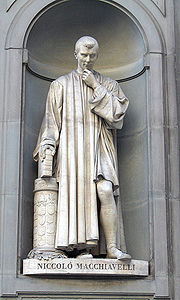
Sometime during the course of your education, many of you will be asked to read to book called The Prince. This book was written in 1513 by a man named Niccolo Machiavelli.
Machiavelli is thought to be one of the first people to write about what is now known as political science.
The Prince, which was written for a man named Lorenzo de Medici, is about power; how to get it and how to keep it. The methods described in the book are considered by many to be cruel and amoral, yet it is still widely read almost 500 years after it was first written.
Machiavelli’s methods did not include bucket filling. In fact, while he believed that it was best for leaders to be both loved and feared, he also believed that most people could only be one or the other. In such a case, he wrote, it was better to be feared.
Machiavelli wrote his book in a cold, purely objective tone. It contains no emotional content or sentimentality. As a result, while the book contains some good advice, it is known primarily for supporting the belief that “the end justifies the means”.
For Machiavelli, any tool (the means) used to get or keep power (the end) was okay. That’s been interpreted to include lying, cheating, bullying, backstabbing, stealing, spying and even murder. Today, such methods are called “machinations” and people who use them are called “Machiavellian”.
Some Machiavellian historical figures:
While frowned upon by most people, machinations are used today by people seeking to have a power advantage over others. For example, it is said that Bill Gates,
the founder of Microsoft and one of the richest people in the world, started his company with stolen software.
In the 1990’s Microsoft, then the biggest software company in the world, bullied other companies into using its products and took over companies which made products better than theirs. They only stopped after they were sued several times in several different countries for unfair business practices. Microsoft lost almost every suit.
If you’ve been watching this season’s Survivor, then you’ve seen machinations in action, for one of the players, Russell, is Machiavellian to the extreme.
In his first couple of days on the show, he emptied everyone’s canteen, burned some of their clothes and made alliances with several players. Making alliances are a normal tactic in this game, except that Russell made the same promise to all of the them: “I’ll take you to the final two with me”. You do the math.
On the first night Russell told all of his teammates a story of how he was in New Orleans when hurricane Katrina struck, got stranded on the roof of his house in the flood that followed and lost his dog in the process. All of his teammates felt sympathy for him.
There was only one problem:
“I’ve never been to Louisiana, let alone New Orleans,” he told the cameraman.
Whenever anyone told Russell that they didn’t trust him, he arranged to have them voted off by saying the other player “wasn’t trustworthy”.
Russell’s Machiavellian strategy has gotten him to the merge and the final 10, but he is now outnumbered by the former members of another tribe. They don’t trust him.
Many historical Machiavellian leaders met unpleasant ends. Julius Caesar was murdered. Napoleon was exiled. Hitler killed himself.
Within the tiny world of Survivor, Russell strives to be Caesar. It will be interesting to see how it plays out, for it will demonstrate how effective machinations can be in the 21st century; some 5 centuries after they were first described.
Machiavelli is thought to be one of the first people to write about what is now known as political science.
The Prince, which was written for a man named Lorenzo de Medici, is about power; how to get it and how to keep it. The methods described in the book are considered by many to be cruel and amoral, yet it is still widely read almost 500 years after it was first written.
Machiavelli’s methods did not include bucket filling. In fact, while he believed that it was best for leaders to be both loved and feared, he also believed that most people could only be one or the other. In such a case, he wrote, it was better to be feared.
Machiavelli wrote his book in a cold, purely objective tone. It contains no emotional content or sentimentality. As a result, while the book contains some good advice, it is known primarily for supporting the belief that “the end justifies the means”.
For Machiavelli, any tool (the means) used to get or keep power (the end) was okay. That’s been interpreted to include lying, cheating, bullying, backstabbing, stealing, spying and even murder. Today, such methods are called “machinations” and people who use them are called “Machiavellian”.
Some Machiavellian historical figures:
Julius Caesar.
Napoleon.
Hitler.
While frowned upon by most people, machinations are used today by people seeking to have a power advantage over others. For example, it is said that Bill Gates,
the founder of Microsoft and one of the richest people in the world, started his company with stolen software.
In the 1990’s Microsoft, then the biggest software company in the world, bullied other companies into using its products and took over companies which made products better than theirs. They only stopped after they were sued several times in several different countries for unfair business practices. Microsoft lost almost every suit.
If you’ve been watching this season’s Survivor, then you’ve seen machinations in action, for one of the players, Russell, is Machiavellian to the extreme.
In his first couple of days on the show, he emptied everyone’s canteen, burned some of their clothes and made alliances with several players. Making alliances are a normal tactic in this game, except that Russell made the same promise to all of the them: “I’ll take you to the final two with me”. You do the math.
On the first night Russell told all of his teammates a story of how he was in New Orleans when hurricane Katrina struck, got stranded on the roof of his house in the flood that followed and lost his dog in the process. All of his teammates felt sympathy for him.
There was only one problem:
“I’ve never been to Louisiana, let alone New Orleans,” he told the cameraman.
Whenever anyone told Russell that they didn’t trust him, he arranged to have them voted off by saying the other player “wasn’t trustworthy”.
Russell’s Machiavellian strategy has gotten him to the merge and the final 10, but he is now outnumbered by the former members of another tribe. They don’t trust him.
Many historical Machiavellian leaders met unpleasant ends. Julius Caesar was murdered. Napoleon was exiled. Hitler killed himself.
Within the tiny world of Survivor, Russell strives to be Caesar. It will be interesting to see how it plays out, for it will demonstrate how effective machinations can be in the 21st century; some 5 centuries after they were first described.
Thursday, November 5, 2009
Rivals, a Followup
Back in April 2008, I wrote a post called "Rivals". It was about two boys at Park. One "Wilson" (names aren't real) was consumed by the idea of outdoing the other, "Caleb". In Wilson's mind, he and Caleb were rivals. Caleb, happy go lucky, easy going and a great bucket filler, just did his own thing, completely unconcerned about what Wilson thought.
Well, the boys are seniors now. Caleb, whose real name is Jonah, was just elected Tam high school's Homecoming King.
As for Wilson? Who knows.
Oh, and by the way: Tam's homecoming queen, Rachel, went to Park too.
Well, the boys are seniors now. Caleb, whose real name is Jonah, was just elected Tam high school's Homecoming King.
As for Wilson? Who knows.
Oh, and by the way: Tam's homecoming queen, Rachel, went to Park too.
Tuesday, October 6, 2009
Mill Valley Jack in the Box, R.I.P.
Whenever you ride down Miller Ave you may notice a forlorn, out of place little building near Whole Foods that used to be a Jack in the Box fast food restaurant.

In recent years it's always seemed like a lonely place, a throw back to another era being visited by almost nobody. I, however, remember it when it was new. It's where I got my first real job.
When I was a high school junior all of my friends had flashy bikes. One even traveled to Italy to have one custom built for him. I wanted an Italian bike too. I'd even picked one out. It was a lime green Italvega

with a steel Columbus frame and a mix of Campagnolo,

Stronglight and Mafac components.

Very exotic, and for me, very expensive at $200 (today an equivalent bike would cost over $3000). So, in order to buy this bike, I needed to get a job.
One day, I decided to apply for a job at the Jack in the Box. I hopped on my beater bike and rode down from Homestead Valley. When I was about halfway there, it started to rain. I got soaked. I had a choice: continue on and apply for a job while all wet, or go back home and try again another day? I continued on.
When the manager saw me, he shook his head, smiled slightly and gave me an application. After I turned it in he told me that he didn't have any openings but would call me when one came up.
He called me back that night.
Later, he told me he hired me because anyone who was willing to ride his bike in the rain to apply for a job deserved to have one.
Anyway, I soon found myself working on Friday, Saturday and Sundays. Since I was the new guy I got all of the lousy shifts. On Fridays and Saturdays I worked from 6 p.m til 2 in the morning. Sometimes I worked from 7 p.m. til 3.
The store didn't do much business after 9, so I spent most of my shift cleaning up the store and restocking it for the next day by doing such things as slicing tomatoes, onions and lettuce.

For our safety, we locked the dining room at 10 p.m. It's a good thing we did, too, because the later it got, the stranger our customers were.
For one thing, we'd get a rush of customers every night (early morning, really) just after 2 a.m., which is when bars close. These customers were mostly from the nearest bar, the 2 A.M. Club. Let's just say that many of those people shouldn't have been driving.
One night, four high school boys walked up the entrance at around 11. We told them the dining room was closed. They left. A minute later, the bell sounded, indicating that there was a car waiting to place an order. We took the order, then waited for the car to drive up. There was no car. It was the boys.
The boys came up to the window in two rows of two as if they were in a car. They were all in a half crouch and the one closest to the window had his hands up as if he were holding a steering wheel. When we handed him his order, he pretended to roll down his window, handed us his money, reached up to get his food, handed it to the guy next to him, rolled up his window and, with his hands still holding the wheel and with his friends still in formation, "drove" off.
At around midnight each night another worker would show up for his 12 - 8 graveyard shift. His name was Matt. He was the same age as me. He eventually was elected class president at Tam and is now a prominent lawyer. Back then, he was kind of the class clown.
One night while I was in the back slicing tomatoes a customer walked up to the drive through window. I never saw him, for Matt took his order, but I did hear Matt's side of the conversation. It went something like this:
"Hi, can I help you?"
(unintelligible reply)
"Sorry man, I can't do that. How about a nice Jumbo Jack?"
(louder, but still unintelligible reply)
"Look, I'm really busy. Do you want some food or not?"
When I heard that, I came out of the back to see what was going on, but the customer was gone.
"What was that all about?", I asked Matt.
"It was nothing," replied Matt, "just some guy trying to rob us."
All in all, it was a pretty fun job. Learned how to cook real fast, work a cash register and deal with the public. These were all skills that would come in handy as I grew up. Oh, and I got paid, too. My wage? $1.65 per hour.
In recent years it's always seemed like a lonely place, a throw back to another era being visited by almost nobody. I, however, remember it when it was new. It's where I got my first real job.
When I was a high school junior all of my friends had flashy bikes. One even traveled to Italy to have one custom built for him. I wanted an Italian bike too. I'd even picked one out. It was a lime green Italvega

with a steel Columbus frame and a mix of Campagnolo,

Stronglight and Mafac components.

Very exotic, and for me, very expensive at $200 (today an equivalent bike would cost over $3000). So, in order to buy this bike, I needed to get a job.
One day, I decided to apply for a job at the Jack in the Box. I hopped on my beater bike and rode down from Homestead Valley. When I was about halfway there, it started to rain. I got soaked. I had a choice: continue on and apply for a job while all wet, or go back home and try again another day? I continued on.
When the manager saw me, he shook his head, smiled slightly and gave me an application. After I turned it in he told me that he didn't have any openings but would call me when one came up.
He called me back that night.
Later, he told me he hired me because anyone who was willing to ride his bike in the rain to apply for a job deserved to have one.
Anyway, I soon found myself working on Friday, Saturday and Sundays. Since I was the new guy I got all of the lousy shifts. On Fridays and Saturdays I worked from 6 p.m til 2 in the morning. Sometimes I worked from 7 p.m. til 3.
The store didn't do much business after 9, so I spent most of my shift cleaning up the store and restocking it for the next day by doing such things as slicing tomatoes, onions and lettuce.

For our safety, we locked the dining room at 10 p.m. It's a good thing we did, too, because the later it got, the stranger our customers were.
For one thing, we'd get a rush of customers every night (early morning, really) just after 2 a.m., which is when bars close. These customers were mostly from the nearest bar, the 2 A.M. Club. Let's just say that many of those people shouldn't have been driving.
One night, four high school boys walked up the entrance at around 11. We told them the dining room was closed. They left. A minute later, the bell sounded, indicating that there was a car waiting to place an order. We took the order, then waited for the car to drive up. There was no car. It was the boys.
The boys came up to the window in two rows of two as if they were in a car. They were all in a half crouch and the one closest to the window had his hands up as if he were holding a steering wheel. When we handed him his order, he pretended to roll down his window, handed us his money, reached up to get his food, handed it to the guy next to him, rolled up his window and, with his hands still holding the wheel and with his friends still in formation, "drove" off.
At around midnight each night another worker would show up for his 12 - 8 graveyard shift. His name was Matt. He was the same age as me. He eventually was elected class president at Tam and is now a prominent lawyer. Back then, he was kind of the class clown.
One night while I was in the back slicing tomatoes a customer walked up to the drive through window. I never saw him, for Matt took his order, but I did hear Matt's side of the conversation. It went something like this:
"Hi, can I help you?"
(unintelligible reply)
"Sorry man, I can't do that. How about a nice Jumbo Jack?"
(louder, but still unintelligible reply)
"Look, I'm really busy. Do you want some food or not?"
When I heard that, I came out of the back to see what was going on, but the customer was gone.
"What was that all about?", I asked Matt.
"It was nothing," replied Matt, "just some guy trying to rob us."
All in all, it was a pretty fun job. Learned how to cook real fast, work a cash register and deal with the public. These were all skills that would come in handy as I grew up. Oh, and I got paid, too. My wage? $1.65 per hour.
Monday, September 28, 2009
How Full is Your Bucket?
If you are one of the two or three non-Park School students who read this blog, you may have noticed that I've made several recent references to a "bucket". This bucket, in case you were wondering, is a metaphor coined by a psychologist named Donald O. Clifton.
Each of us has a bucket. In it, we carry our sense of well being. When it is full, we feel great, but when it is empty, we feel terrible. The fullness of one's bucket is determined, in large part, by one's interactions with other people. Every interaction we have with another person helps fill or empty their bucket.
Every time we do something the least bit positive to another person, like saying "hello" to them or holding the door for them, we are filling their bucket. When we ignore a greeting or shut the door in someone's face, we are emptying, or dipping into, their bucket.
What's interesting about this is that every time you fill (or dip into) someone's bucket you are doing the same to your own. Filling buckets makes you feel good, while bucket dipping makes you feel down.
I introduced the bucket idea to the 5th graders at Park at the beginning of the school year. They understood it right away. I asked them to practice filling buckets and told them that an easy way to start would be to greet people, by name, with a smile.
The results have been amazing. Once the kids discovered how good filling others' buckets made them feel, bucket filling took on a life of its own. One can now hear a chorus of "hi's" and "thank yous" and the saying of names around here every day. Many kids go out of their way to try to fill the buckets of people who are down and sometimes, people who are known to be unfriendly.
Filling buckets sometimes pays unexpected dividends.
One thing I do is greet cashiers and checkers at the various stores at which I shop. I mean, think about it. Cashiers have kind of a thankless job. They have to deal with hundreds of strangers each day. Many of them are in a hurry, preoccupied or view the cashier as a non-person.
I make a point to be pleasant to them. I don't engage them in conversation, but I do say hello, ask them how they are, make eye contact, smile and say "thank you".
Simple, right?
The result is that many of the cashiers who work at the stores where I shop regularly will hold their line open for me, or open their line when they see me. They then greet me with a smile and ask how my day has been.
Try it yourself. Start small. Say "hi" and "thank you". Smile. Use people's names. Make eye contact. I think you'll find that filling buckets like this will make you feel pretty good and that your days will be more enjoyable.
Soon, you may find yourself looking for other ways to fill the buckets of others' and therefore, your own.
Each of us has a bucket. In it, we carry our sense of well being. When it is full, we feel great, but when it is empty, we feel terrible. The fullness of one's bucket is determined, in large part, by one's interactions with other people. Every interaction we have with another person helps fill or empty their bucket.
Every time we do something the least bit positive to another person, like saying "hello" to them or holding the door for them, we are filling their bucket. When we ignore a greeting or shut the door in someone's face, we are emptying, or dipping into, their bucket.
What's interesting about this is that every time you fill (or dip into) someone's bucket you are doing the same to your own. Filling buckets makes you feel good, while bucket dipping makes you feel down.
I introduced the bucket idea to the 5th graders at Park at the beginning of the school year. They understood it right away. I asked them to practice filling buckets and told them that an easy way to start would be to greet people, by name, with a smile.
The results have been amazing. Once the kids discovered how good filling others' buckets made them feel, bucket filling took on a life of its own. One can now hear a chorus of "hi's" and "thank yous" and the saying of names around here every day. Many kids go out of their way to try to fill the buckets of people who are down and sometimes, people who are known to be unfriendly.
Filling buckets sometimes pays unexpected dividends.
One thing I do is greet cashiers and checkers at the various stores at which I shop. I mean, think about it. Cashiers have kind of a thankless job. They have to deal with hundreds of strangers each day. Many of them are in a hurry, preoccupied or view the cashier as a non-person.
I make a point to be pleasant to them. I don't engage them in conversation, but I do say hello, ask them how they are, make eye contact, smile and say "thank you".
Simple, right?
The result is that many of the cashiers who work at the stores where I shop regularly will hold their line open for me, or open their line when they see me. They then greet me with a smile and ask how my day has been.
Try it yourself. Start small. Say "hi" and "thank you". Smile. Use people's names. Make eye contact. I think you'll find that filling buckets like this will make you feel pretty good and that your days will be more enjoyable.
Soon, you may find yourself looking for other ways to fill the buckets of others' and therefore, your own.
Sunday, September 6, 2009
Navigating a Blog
Hey Everyone:
Thanks for reading my blog and thanks for all of your comments. When reading your comments, it occurred to me that some of you may not understand how to use all of the things that are on the blog, so I decided to write this post to explain some of its features to you. This will help you fully enjoy anyone's blog and perhaps give you some ideas for your own.
One thing you should know is that there are many videos linked to the blog. There videos on Tinikling, juggling, rope jumping and a dunk by a girl. The latest video is linked to "The Ripple Effect". I think you'll like them.
To watch any of the videos, simply click on either of the play icons (the little triangles). Watch "The Ripple Effect" first, let me know what you think of J Mac's story.
Another useful little gadget is the BMI calculator. This can be found just below the Calvin & Hobbes cartoon. To understand what it is for and how to use it, read my post "Weight Obsession". BMI is something we will be talking about later this year.
Farther down the right hand side of the page is a Video Bar. This is a link to all the videos I've posted on YouTube. These are mostly dance routines created by Park School students. Just click on the bar to see them.
Below the video bar is a Label list. This is an easy way to find old posts. Click on the label that interests you and Blogger will open all posts related to that subject.
Enjoy!
Thanks for reading my blog and thanks for all of your comments. When reading your comments, it occurred to me that some of you may not understand how to use all of the things that are on the blog, so I decided to write this post to explain some of its features to you. This will help you fully enjoy anyone's blog and perhaps give you some ideas for your own.
One thing you should know is that there are many videos linked to the blog. There videos on Tinikling, juggling, rope jumping and a dunk by a girl. The latest video is linked to "The Ripple Effect". I think you'll like them.
To watch any of the videos, simply click on either of the play icons (the little triangles). Watch "The Ripple Effect" first, let me know what you think of J Mac's story.
Another useful little gadget is the BMI calculator. This can be found just below the Calvin & Hobbes cartoon. To understand what it is for and how to use it, read my post "Weight Obsession". BMI is something we will be talking about later this year.
Farther down the right hand side of the page is a Video Bar. This is a link to all the videos I've posted on YouTube. These are mostly dance routines created by Park School students. Just click on the bar to see them.
Below the video bar is a Label list. This is an easy way to find old posts. Click on the label that interests you and Blogger will open all posts related to that subject.
Enjoy!
Wednesday, June 10, 2009
J.T. and Coach: A Contrast in Character
Anybody watch the last edition of "Survivor"?

I started watching this show a couple of years ago, mostly because a lot of my students watched it and it gave us something we could talk about together. Those students are gone now, but I still watch the show because I find it to be an interesting study of people's behavior. As I watch the show I'm always struck by how many different kinds of personalities there are and the way living under extreme conditions brings out the best and worst in them.
As one watches the show, one can't help but to start rooting for, or against, certain players. Through my conversations with others who watch the show I've learned that viewers have many different reasons for liking or disliking characters. I'm always a little surprised at how many viewers choose favorites based on how a person looks. To me, that's completely insignificant. My favorite players are the ones who exhibit the strongest character.
By strongest character, I mean the players who possess personality traits such as trustworthiness, reliability, ingenuity, willingness to work hard, cooperation and leadership ability and who are able to exhibit these characteristics even under the most extreme circumstances.
Last season, there were two contestants who offered a sharp contrasts in character. One of them talked about the value of character, but didn't practice it, while the other practiced it, but didn't talk about it.
In one of his interviews early in the show, "Coach", as he wanted to be known, told viewers that he wanted to play the game "with honesty and integrity".

As the game went on, he called his allies "warriors" and himself the "dragonslayer". He would tell the other players stories of life and death experiences which he barely survived.
At other times, he would wander off by himself (but in full view of the other players) and engage in a martial arts/meditation routine that "only about 20 people in the world know about". Maybe, but it looked pretty hokey.
Other players weren't impressed.
"A 37 year old man who calls himself the Dragonslayer? Give me a break". said one (for that matter, why does a grown man want to known as "Coach"?.
Coach's behavior was designed to do two things: a) draw attention to himself and b) convince the world that he had experience that few others had and that it made him somehow better than everybody else. The "honor and integrity" line was just something he said to make himself look good.
Later in the show, Coach's true nature was revealed. When it was clear that he was losing his grip on the game, Coach suddenly changed his tune. On a day when it seemed like there was a chance that he would be sent to "Exile Island", where he would have to spend the night alone with no fire and no food, he pleaded not to be sent, saying that he had "asthma".
"Asthma?," asked another player, "we've been here 30 something days and that's the first time he's mentioned asthma. I think he's scared to go to exile."
They sent him anyway.
Later, in an immunity challenge requiring a great deal of mental toughness to win, Coach, the dragonslayer and martial arts practitioner, eliminated himself by collapsing onto the ground and curling himself into a ball. He claimed that his back hurt.
The dragonslayer had gone from mysterious and arrogant to just plain pathetic.
In almost direct contrast to Coach was J.T..

While Coach tried to create this mystical air about himself, J.T. described himself as a "just a Farm boy from Alabama". While Coach was "meditating", J.T. was fishing for the whole team or chopping wood or cooking. While Coach was telling stories about his wild "experiences", J.T. just listened, never talking about himself. When all of the contestants were asked "who would you trust with your life?", the unanimous choice was J.T.. When it obvious that it was time to vote Coach out of the game, the only player who didn't vote for him was J.T., because he once promised Coach that he would never vote against him. For all of Coach's talk about playing the game with honor and integrity, it was J.T. who actually did it.
In the end, J.T. became only the second unanimous winner in Survivor history.
Character counts.
Addendum: Honor and integrity? After the show was over, it was revealed that Coach isn't one. That's because he was fired from his job for lying. Apparently, he told the college for which he worked that he needed a leave of absence for "cancer tests". He actually left to play Survivor.
Somebody researched Coach's stories by matching his claimed dates and events to real events and the same times and locations. They didn't match.
Finally, somebody asked Coach where he learned his "meditation" routine. In a rare moment of honesty, he said he made it up for the show.

I started watching this show a couple of years ago, mostly because a lot of my students watched it and it gave us something we could talk about together. Those students are gone now, but I still watch the show because I find it to be an interesting study of people's behavior. As I watch the show I'm always struck by how many different kinds of personalities there are and the way living under extreme conditions brings out the best and worst in them.
As one watches the show, one can't help but to start rooting for, or against, certain players. Through my conversations with others who watch the show I've learned that viewers have many different reasons for liking or disliking characters. I'm always a little surprised at how many viewers choose favorites based on how a person looks. To me, that's completely insignificant. My favorite players are the ones who exhibit the strongest character.
By strongest character, I mean the players who possess personality traits such as trustworthiness, reliability, ingenuity, willingness to work hard, cooperation and leadership ability and who are able to exhibit these characteristics even under the most extreme circumstances.
Last season, there were two contestants who offered a sharp contrasts in character. One of them talked about the value of character, but didn't practice it, while the other practiced it, but didn't talk about it.
In one of his interviews early in the show, "Coach", as he wanted to be known, told viewers that he wanted to play the game "with honesty and integrity".

As the game went on, he called his allies "warriors" and himself the "dragonslayer". He would tell the other players stories of life and death experiences which he barely survived.
At other times, he would wander off by himself (but in full view of the other players) and engage in a martial arts/meditation routine that "only about 20 people in the world know about". Maybe, but it looked pretty hokey.
Other players weren't impressed.
"A 37 year old man who calls himself the Dragonslayer? Give me a break". said one (for that matter, why does a grown man want to known as "Coach"?.
Coach's behavior was designed to do two things: a) draw attention to himself and b) convince the world that he had experience that few others had and that it made him somehow better than everybody else. The "honor and integrity" line was just something he said to make himself look good.
Later in the show, Coach's true nature was revealed. When it was clear that he was losing his grip on the game, Coach suddenly changed his tune. On a day when it seemed like there was a chance that he would be sent to "Exile Island", where he would have to spend the night alone with no fire and no food, he pleaded not to be sent, saying that he had "asthma".
"Asthma?," asked another player, "we've been here 30 something days and that's the first time he's mentioned asthma. I think he's scared to go to exile."
They sent him anyway.
Later, in an immunity challenge requiring a great deal of mental toughness to win, Coach, the dragonslayer and martial arts practitioner, eliminated himself by collapsing onto the ground and curling himself into a ball. He claimed that his back hurt.
The dragonslayer had gone from mysterious and arrogant to just plain pathetic.
In almost direct contrast to Coach was J.T..

While Coach tried to create this mystical air about himself, J.T. described himself as a "just a Farm boy from Alabama". While Coach was "meditating", J.T. was fishing for the whole team or chopping wood or cooking. While Coach was telling stories about his wild "experiences", J.T. just listened, never talking about himself. When all of the contestants were asked "who would you trust with your life?", the unanimous choice was J.T.. When it obvious that it was time to vote Coach out of the game, the only player who didn't vote for him was J.T., because he once promised Coach that he would never vote against him. For all of Coach's talk about playing the game with honor and integrity, it was J.T. who actually did it.
In the end, J.T. became only the second unanimous winner in Survivor history.
Character counts.
Addendum: Honor and integrity? After the show was over, it was revealed that Coach isn't one. That's because he was fired from his job for lying. Apparently, he told the college for which he worked that he needed a leave of absence for "cancer tests". He actually left to play Survivor.
Somebody researched Coach's stories by matching his claimed dates and events to real events and the same times and locations. They didn't match.
Finally, somebody asked Coach where he learned his "meditation" routine. In a rare moment of honesty, he said he made it up for the show.
Making Friends - Step Six (of seven)
If you've been practicing the things we've written about so far, you've learned how powerful those tools are.
Being interested in others, smiling and using other people's names will break down their natural barriers to strangers and allow them to see you as someone who is friendly. Listening and encouraging others to talk about themselves will tell others that you are not just being nice but are really interested in getting to know them. Others now see you, not just as someone who is friendly and approachable, but as someone who is good to talk to.
People like other people who are good listeners and who are willing to let them talk.
By using the skills we've described so far, you've probably decided who you'd really like to have as a friend. Usually, this means that you've found others who are interested in some of the same things as you. If this is the case, the next step should be easy.
If you're interested in strengthening your relationship with someone, try this: start conversations with them about subjects that you know that you both find interesting, but do so in a way that invites them to talk about it.
Example:
Let's say the you want to be friends with someone who likes to read, like you do. You notice that s/he's carrying a book you've read and liked, so you start a conversation about it.
You: "Hi (person's name), how do you like that book?"
Other: "It's really good. I'm almost done and I don't want it to end."
You: "I felt the same way. Why do you like it so much?"
Other: "I really like how there is text and pictures and how the author uses pictures to tell a lot of the story. It makes me feel like I'm in the story."
You: "Me too!"
Other: "Really? How about when Hugo figured out who the old man was? I thought that was awesome!"...
See? By asking a question about something about which you know the other was interested, you found the other person eager to talk about it. By continuing to ask questions, you invited the other person to continue talking, which kept the conversation going. The other person became curious about what you thought and a full conversation took place. The conversation brought the two of you closer.
In the future, if the other person wants to talk about a book with someone, there's a good chance they'll come to you, because they'll know that this is a subject about which you like to talk. A friendship has begun.
Step Six: Talk in terms of the other person's interests
Being interested in others, smiling and using other people's names will break down their natural barriers to strangers and allow them to see you as someone who is friendly. Listening and encouraging others to talk about themselves will tell others that you are not just being nice but are really interested in getting to know them. Others now see you, not just as someone who is friendly and approachable, but as someone who is good to talk to.
People like other people who are good listeners and who are willing to let them talk.
By using the skills we've described so far, you've probably decided who you'd really like to have as a friend. Usually, this means that you've found others who are interested in some of the same things as you. If this is the case, the next step should be easy.
If you're interested in strengthening your relationship with someone, try this: start conversations with them about subjects that you know that you both find interesting, but do so in a way that invites them to talk about it.
Example:
Let's say the you want to be friends with someone who likes to read, like you do. You notice that s/he's carrying a book you've read and liked, so you start a conversation about it.
You: "Hi (person's name), how do you like that book?"
Other: "It's really good. I'm almost done and I don't want it to end."
You: "I felt the same way. Why do you like it so much?"
Other: "I really like how there is text and pictures and how the author uses pictures to tell a lot of the story. It makes me feel like I'm in the story."
You: "Me too!"
Other: "Really? How about when Hugo figured out who the old man was? I thought that was awesome!"...
See? By asking a question about something about which you know the other was interested, you found the other person eager to talk about it. By continuing to ask questions, you invited the other person to continue talking, which kept the conversation going. The other person became curious about what you thought and a full conversation took place. The conversation brought the two of you closer.
In the future, if the other person wants to talk about a book with someone, there's a good chance they'll come to you, because they'll know that this is a subject about which you like to talk. A friendship has begun.
Step Six: Talk in terms of the other person's interests
Tuesday, June 2, 2009
Making Friends - Step Five
Do you see how the first four steps are interconnected? By smiling, using other people's names and listening, you are demonstrating a genuine interest in other people. People will really start to like you. Now let's learn how to turn this likability into real friendships.
Most friendships are based on common interests, likes and dislikes. Good friends know and understand each other. So, how do you get to know somebody without seeming nosy? How do you learn what another person's likes and dislikes are? How do you demonstrate interest and understanding?
This is actually pretty easy if you're really interested in people and you are a good listener.
You accomplish all of the above by encouraging people to talk about themselves.
People, especially kids, love to talk about themselves. As detailed in a previous post, most kids' conversations are really kids taking turns talking about themselves. That isn't a real conversation. It is people talking at each other instead of to each other.
If you want to know someone better and you want them to feel that you are interested in them, all you have to do is let them talk, while you ask questions that show you are interested in what they have to say. If they are interested in you, they will give you a chance to talk, too.
Example:
Potential friend: "I had a swim meet this weekend."
You: "Me too! How many events were you in?"
Potential friend: "Four. 50 free, 50 fly and two relays."
You: "How did you do?"
Potential friend: "One second, one third and two firsts."
You: "Wow! That's good!"
Potential friend: "Thanks. How was your meet?"
See? The result of this little conversation is that two people discovered they have a common interest. One (you) demonstrated interest in the other by asking questions that allowed the other a chance to talk and the other, after talking, reciprocated. They next time the two meet, they will have something to talk about and will be able to talk to each other, not at each other.
Step Five: Encourage people to talk about themselves
Most friendships are based on common interests, likes and dislikes. Good friends know and understand each other. So, how do you get to know somebody without seeming nosy? How do you learn what another person's likes and dislikes are? How do you demonstrate interest and understanding?
This is actually pretty easy if you're really interested in people and you are a good listener.
You accomplish all of the above by encouraging people to talk about themselves.
People, especially kids, love to talk about themselves. As detailed in a previous post, most kids' conversations are really kids taking turns talking about themselves. That isn't a real conversation. It is people talking at each other instead of to each other.
If you want to know someone better and you want them to feel that you are interested in them, all you have to do is let them talk, while you ask questions that show you are interested in what they have to say. If they are interested in you, they will give you a chance to talk, too.
Example:
Potential friend: "I had a swim meet this weekend."
You: "Me too! How many events were you in?"
Potential friend: "Four. 50 free, 50 fly and two relays."
You: "How did you do?"
Potential friend: "One second, one third and two firsts."
You: "Wow! That's good!"
Potential friend: "Thanks. How was your meet?"
See? The result of this little conversation is that two people discovered they have a common interest. One (you) demonstrated interest in the other by asking questions that allowed the other a chance to talk and the other, after talking, reciprocated. They next time the two meet, they will have something to talk about and will be able to talk to each other, not at each other.
Step Five: Encourage people to talk about themselves
Monday, May 18, 2009
Making Friends - Step Four
Okay, now we're getting into the nitty-gritty. Use the first three tools faithfully, and you will find that people, including people who never showed any interest in you before, will look forward to seeing you, be interested in getting to know you, talking to you and spending time with you.
The trick now is to really get to know these people and turn their interest in you into a real friendship.
This next skill is something that most adults, including me, can do better. Therefore, if you can master this skill at an early age you will possess a skill that many don't. Not only be able to make lots of friends, but you will be successful at anything you choose to do. The skill?
The ability to listen.
At the most basic level, a good listener pays close attention to and absorbs everything that s/he hears.
President Clinton used to have aides read complicated documents to him while he was busy doing something else. When the aide was done, Clinton could remember the document almost word for word. While discussing the document and having a disagreement with an aide about what it said, he would often say something like: "Go back to page 92, second paragraph. The one that begins with..." and he'd always be right.
Mr. Clinton demonstrated a phenomenal ability to listen and absorb words, facts and figures. But there's more to listening than that, especially when it comes to your relationships with people. If you really work at being a good listener and as your understanding of people grows, you will learn that a lot of what you are being told isn't being said.
Sound weird, but it's true. Truly good listening skills mean the ability to hear what is being said to understand what isn't being said. This is called the ability to read between the lines.
Simple Example: Let's say that I have a great player on my basketball team. S/he's tough, fast, skilled, hard working, enthusiastic. Looked up to by the other players. Then one day s/he shows up for a game and says, "my stomach hurts."
This is a simple statement that can mean a lot of different things. Could simply mean that the player's stomach hurts. But it could also mean that the player is scared and is looking for reassurance from me. It is up to me, the listener, to figure out what the player really means.
A poor listener would say something like: "I'm sorry to hear that, but we really need you today. Can you tough it out?"
A good listener would ask questions:
Coach: "Do you think it was something you ate?"
Player: "No."
Coach: "How long has your stomach been hurting?"
Player: "Not long."
Coach: "Do you need to sit out?"
Player: "No."
These answers indicate that the player still wants to play, so the stomach pain might just be anxiety. Coach's job now is to take the pressure off the player.
Coach: "Okay, I'll tell you what. I'm going to start you as usual, but if your stomach really starts to bother you, let me know and I'll take you out, okay? Anything you can do to help is good, so just give us the best you can."
Player: "Okay."
The ability to hear what isn't being said is something that comes with practice and experience. You'll never develop it, however, unless you make an effort to listen closely.
Step Four: Listen
The trick now is to really get to know these people and turn their interest in you into a real friendship.
This next skill is something that most adults, including me, can do better. Therefore, if you can master this skill at an early age you will possess a skill that many don't. Not only be able to make lots of friends, but you will be successful at anything you choose to do. The skill?
The ability to listen.
At the most basic level, a good listener pays close attention to and absorbs everything that s/he hears.
President Clinton used to have aides read complicated documents to him while he was busy doing something else. When the aide was done, Clinton could remember the document almost word for word. While discussing the document and having a disagreement with an aide about what it said, he would often say something like: "Go back to page 92, second paragraph. The one that begins with..." and he'd always be right.
Mr. Clinton demonstrated a phenomenal ability to listen and absorb words, facts and figures. But there's more to listening than that, especially when it comes to your relationships with people. If you really work at being a good listener and as your understanding of people grows, you will learn that a lot of what you are being told isn't being said.
Sound weird, but it's true. Truly good listening skills mean the ability to hear what is being said to understand what isn't being said. This is called the ability to read between the lines.
Simple Example: Let's say that I have a great player on my basketball team. S/he's tough, fast, skilled, hard working, enthusiastic. Looked up to by the other players. Then one day s/he shows up for a game and says, "my stomach hurts."
This is a simple statement that can mean a lot of different things. Could simply mean that the player's stomach hurts. But it could also mean that the player is scared and is looking for reassurance from me. It is up to me, the listener, to figure out what the player really means.
A poor listener would say something like: "I'm sorry to hear that, but we really need you today. Can you tough it out?"
A good listener would ask questions:
Coach: "Do you think it was something you ate?"
Player: "No."
Coach: "How long has your stomach been hurting?"
Player: "Not long."
Coach: "Do you need to sit out?"
Player: "No."
These answers indicate that the player still wants to play, so the stomach pain might just be anxiety. Coach's job now is to take the pressure off the player.
Coach: "Okay, I'll tell you what. I'm going to start you as usual, but if your stomach really starts to bother you, let me know and I'll take you out, okay? Anything you can do to help is good, so just give us the best you can."
Player: "Okay."
The ability to hear what isn't being said is something that comes with practice and experience. You'll never develop it, however, unless you make an effort to listen closely.
Step Four: Listen
Saturday, May 16, 2009
The Power of Determination and Persistance
Graduation speeches are an old tradition. All of you will speak at your 5th grade graduation, but as you get older and your schools get bigger, fewer and fewer graduating students get to speak. At big Universities, famous people are asked to speak.
President Obama will be speaking at University of Notre Dame, one of the most famous schools in the country. Notre Dame has 8000 students.
Michelle Obama spoke to the first graduating class of UC Merced, a school that's only been in existence for 4 years and which has only 2718 students.
Why did Mrs. Obama choose to speak at this small school? Read on...
First Lady Delivers a Charge to Graduates
Jim Wilson/The New York Times

First Lady Michelle Obama waves to the first full four year graduates of the Univ of California at Merced on Saturday.
Published: May 16, 2009
MERCED, Calif. — Michelle Obama on Saturday encouraged the first full graduating class at the University of California, Merced, to help change the world by using the same determination they had shown in bringing her to campus.
“A few people may be wondering why did I choose the University of California, Merced, to deliver my first commencement speech as first lady,” Mrs. Obama said. “The answer is simple: you inspired me, you touched me.
“There are few things that are more rewarding than to watch young people recognize that they have the power to make their dreams come true. And you did just that.”
Mrs. Obama was drafted to speak here at the smallest, newest campus in the University of California system through a lobbying effort by students and their families. They peppered the White House with letters, videos and hundreds of Valentine’s Day cards.
“And let me tell you, it worked,” she said. “Because I’m here.”
The speech capped weeks of anticipation at the university for an event that left some students star-struck on a blazingly bright and hot afternoon.
“I haven’t seen anyone of that magnitude in person,” said Daniel Titcher, 22, a senior. “Maybe a state senator or assemblyman or something, but nothing like this.”
The appearance also delighted university officials, who had been working to raise enough money to pay for a more elaborate commencement, attended by more than 10,000 people. The $700,000 price tag for the event included enhanced security, like dozens of metal detectors. Lookouts were on rooftops around the school’s quad, and Secret Service agents patrolled the campus, which sits surrounded by browning farmland outside Merced.
John Garamendi Jr., the vice chancellor for university relations, said he had been supportive but skeptical when student leaders told him they were trying to book Mrs. Obama. “I said, ‘Good luck,’ ” Mr. Garamendi recalled, with a laugh. “I said, ‘I love you guys.’ And I kept walking.”
But sure enough, in late March, Mrs. Obama announced that she would make her sole college commencement appearance this season at the Merced campus. The decision brought a swell of pride to this university in the Central Valley of California.
“Anybody who asks where my daughter’s graduating from, I say, ‘U.C. Merced,’ and they go, ‘Oh!’ ” said Shelly Comer, a nurse whose elder daughter, Michelle, was receiving her degree in psychology. “And then they start talking about Michelle Obama.”
Mr. Garamendi echoed that. “The eyes of the world are on us at this moment,” he said. “People are learning that there are positive things happening in California’s Central Valley.”
The first lady’s visit brought a jolt of excitement to the region, which has been battered by drought, high unemployment and a high foreclosure rate.
Conor Mangan, 22, said he hoped that Mrs. Obama’s appearance would help the local economy, if only for a day. “I hope it pays off,” said Mr. Mangan, who noted that he had backed Ron Paul in the presidential race.
Economic concerns were also on the mind of Irvin Junprung, 22, a biology major, who summed up the immediate plans for him and many of his fellow graduates. “Find work,” Mr. Junprung said.
Speaking at the commencement, Mrs. Obama stayed on inspirational terrain, echoing President Obama’s themes of community service and perseverance in tough times. “My husband knows a little something about the power of hope,” she said. “You are the hope of Merced. And this nation.”
President Obama will be speaking at University of Notre Dame, one of the most famous schools in the country. Notre Dame has 8000 students.
Michelle Obama spoke to the first graduating class of UC Merced, a school that's only been in existence for 4 years and which has only 2718 students.
Why did Mrs. Obama choose to speak at this small school? Read on...
First Lady Delivers a Charge to Graduates
Jim Wilson/The New York Times

First Lady Michelle Obama waves to the first full four year graduates of the Univ of California at Merced on Saturday.
Published: May 16, 2009
MERCED, Calif. — Michelle Obama on Saturday encouraged the first full graduating class at the University of California, Merced, to help change the world by using the same determination they had shown in bringing her to campus.
“A few people may be wondering why did I choose the University of California, Merced, to deliver my first commencement speech as first lady,” Mrs. Obama said. “The answer is simple: you inspired me, you touched me.
“There are few things that are more rewarding than to watch young people recognize that they have the power to make their dreams come true. And you did just that.”
Mrs. Obama was drafted to speak here at the smallest, newest campus in the University of California system through a lobbying effort by students and their families. They peppered the White House with letters, videos and hundreds of Valentine’s Day cards.
“And let me tell you, it worked,” she said. “Because I’m here.”
The speech capped weeks of anticipation at the university for an event that left some students star-struck on a blazingly bright and hot afternoon.
“I haven’t seen anyone of that magnitude in person,” said Daniel Titcher, 22, a senior. “Maybe a state senator or assemblyman or something, but nothing like this.”
The appearance also delighted university officials, who had been working to raise enough money to pay for a more elaborate commencement, attended by more than 10,000 people. The $700,000 price tag for the event included enhanced security, like dozens of metal detectors. Lookouts were on rooftops around the school’s quad, and Secret Service agents patrolled the campus, which sits surrounded by browning farmland outside Merced.
John Garamendi Jr., the vice chancellor for university relations, said he had been supportive but skeptical when student leaders told him they were trying to book Mrs. Obama. “I said, ‘Good luck,’ ” Mr. Garamendi recalled, with a laugh. “I said, ‘I love you guys.’ And I kept walking.”
But sure enough, in late March, Mrs. Obama announced that she would make her sole college commencement appearance this season at the Merced campus. The decision brought a swell of pride to this university in the Central Valley of California.
“Anybody who asks where my daughter’s graduating from, I say, ‘U.C. Merced,’ and they go, ‘Oh!’ ” said Shelly Comer, a nurse whose elder daughter, Michelle, was receiving her degree in psychology. “And then they start talking about Michelle Obama.”
Mr. Garamendi echoed that. “The eyes of the world are on us at this moment,” he said. “People are learning that there are positive things happening in California’s Central Valley.”
The first lady’s visit brought a jolt of excitement to the region, which has been battered by drought, high unemployment and a high foreclosure rate.
Conor Mangan, 22, said he hoped that Mrs. Obama’s appearance would help the local economy, if only for a day. “I hope it pays off,” said Mr. Mangan, who noted that he had backed Ron Paul in the presidential race.
Economic concerns were also on the mind of Irvin Junprung, 22, a biology major, who summed up the immediate plans for him and many of his fellow graduates. “Find work,” Mr. Junprung said.
Speaking at the commencement, Mrs. Obama stayed on inspirational terrain, echoing President Obama’s themes of community service and perseverance in tough times. “My husband knows a little something about the power of hope,” she said. “You are the hope of Merced. And this nation.”
Thursday, April 30, 2009
Making Friends - Step Three
Okay, so now you're walking around, smiling and greeting everyone you know by name. Right? So do you have a bunch of new friends now?
Well, probably not friends, but if you've been smiling and calling people by name others will see you as someone likeable.
But, these are only the first steps. These are called icebreakers, ways to break the barriers that people put between themselves and people they don't know.
Icebreakers are easy, because they don't cost you much. Smiling at someone and calling them by name doesn't make them your friend, but it will leave them with a good impression of you. The next steps are harder, because they will require that you give something of yourself with no guarantee that you'll get anything in return.
Before someone will be your friend, they have to know that you are want to know them better. You have to have a real interest in other people.
Most kids your age have a favorite conversation topic: themselves. Kids love to talk about themselves and the things they've been doing. This results in a lot of conversations which really aren't. Instead, they are a bunch of people waiting for one person to stop talking about her/himself so that another person can start talking about her/himself.
Typical conversation between 3 kids who want to share their spring break experiences:
Kid 1: "I went to Disneyland!"
Kid 2: "I went to Costa Rica!"
Kid 3: "I played a lot of baseball."
Kid 1: "After Disneyland, we went to Magic Mountain!"
Kid 2: "It rained every day, but it was still warm."
Kid 3: "I hit two home runs. "
See? Three people, three separate topics
Now here's how a conversation between two kids who are taking an interest in each other sounds:
Kid 1: "What did you do over spring break?"
Kid 2: "I went to Disneyland."
Kid 1: Oh, that sounds like fun!
Kid 2: "It was. One day we were there from from the time it opened to the time it closed. What did you do?"
Kid 1: "I went to Washington, D.C."
Kid 2: "Wow, that's cool. What was it like?"
In the second conversation, each kid is asking questions or making comments which encourage the other to talk more. When each is finished they give the other a chance to speak.
A good way to make new friends is to encourage others to talk about themselves and show genuine interest in what they're talking about.
Kid 1 (smiling): Hi _______ (remember to use the other's name), I heard you talking about your track meet. When is it?
Kid 2: "It's on Saturday."
Kid 1: "How many events are you in?"
Kid 2: "Four. I'm in the 100, the 400, the long jump and the 4x100 relay."
Kid 1: "Wow! You must be fast!"
Kid 2: "I hope so, but I'm not sure because this is our first meet."
Kid 1: "Don't worry, I'll bet you'll do well."
Kid 2: "Wanna come watch?"
By showing an interest in another person, kid 1 turned a casual conversation into an invitation. This could be the start of a friendship.
Step three: Take a genuine interest in other people.
Well, probably not friends, but if you've been smiling and calling people by name others will see you as someone likeable.
But, these are only the first steps. These are called icebreakers, ways to break the barriers that people put between themselves and people they don't know.
Icebreakers are easy, because they don't cost you much. Smiling at someone and calling them by name doesn't make them your friend, but it will leave them with a good impression of you. The next steps are harder, because they will require that you give something of yourself with no guarantee that you'll get anything in return.
Before someone will be your friend, they have to know that you are want to know them better. You have to have a real interest in other people.
Most kids your age have a favorite conversation topic: themselves. Kids love to talk about themselves and the things they've been doing. This results in a lot of conversations which really aren't. Instead, they are a bunch of people waiting for one person to stop talking about her/himself so that another person can start talking about her/himself.
Typical conversation between 3 kids who want to share their spring break experiences:
Kid 1: "I went to Disneyland!"
Kid 2: "I went to Costa Rica!"
Kid 3: "I played a lot of baseball."
Kid 1: "After Disneyland, we went to Magic Mountain!"
Kid 2: "It rained every day, but it was still warm."
Kid 3: "I hit two home runs. "
See? Three people, three separate topics
Now here's how a conversation between two kids who are taking an interest in each other sounds:
Kid 1: "What did you do over spring break?"
Kid 2: "I went to Disneyland."
Kid 1: Oh, that sounds like fun!
Kid 2: "It was. One day we were there from from the time it opened to the time it closed. What did you do?"
Kid 1: "I went to Washington, D.C."
Kid 2: "Wow, that's cool. What was it like?"
In the second conversation, each kid is asking questions or making comments which encourage the other to talk more. When each is finished they give the other a chance to speak.
A good way to make new friends is to encourage others to talk about themselves and show genuine interest in what they're talking about.
Kid 1 (smiling): Hi _______ (remember to use the other's name), I heard you talking about your track meet. When is it?
Kid 2: "It's on Saturday."
Kid 1: "How many events are you in?"
Kid 2: "Four. I'm in the 100, the 400, the long jump and the 4x100 relay."
Kid 1: "Wow! You must be fast!"
Kid 2: "I hope so, but I'm not sure because this is our first meet."
Kid 1: "Don't worry, I'll bet you'll do well."
Kid 2: "Wanna come watch?"
By showing an interest in another person, kid 1 turned a casual conversation into an invitation. This could be the start of a friendship.
Step three: Take a genuine interest in other people.
Subscribe to:
Posts (Atom)